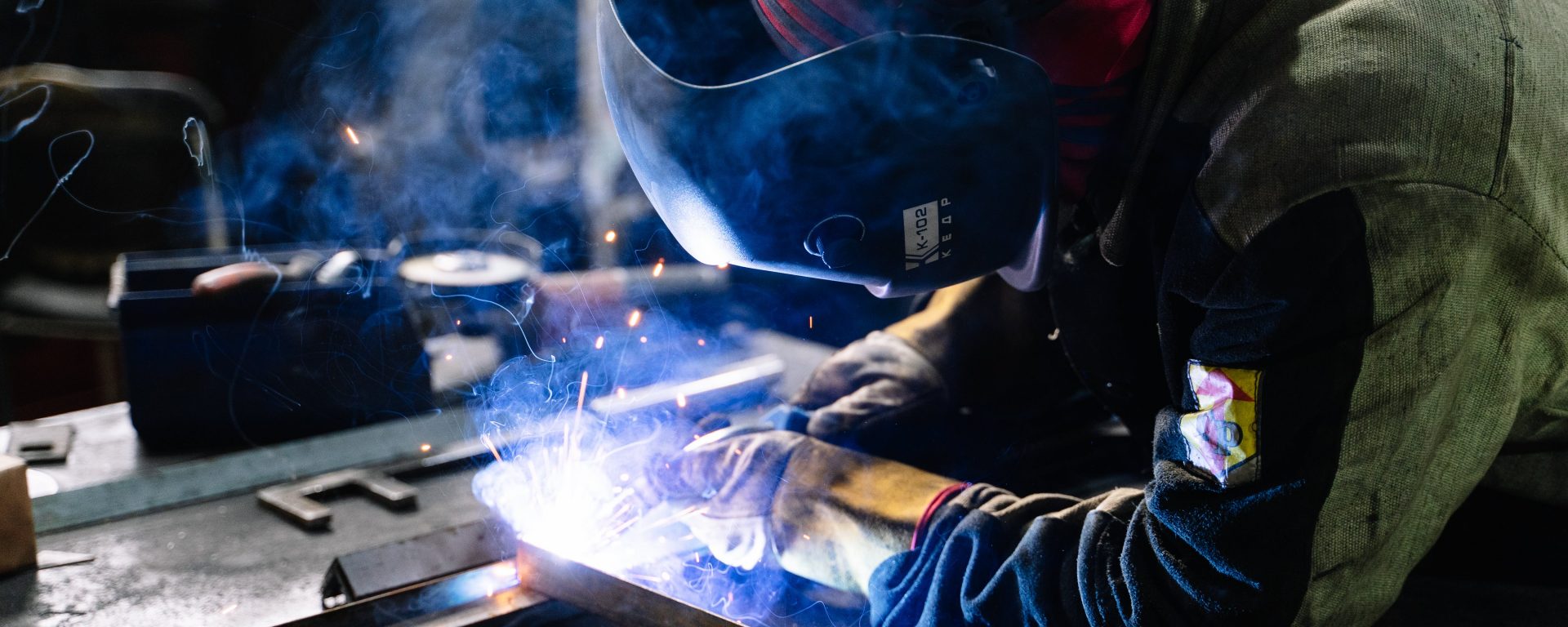
Construction and industrial workers face a wide range of hazards on site each and every day, even if a task is only a one-off occurrence. As such, they and their employers need to be well-versed in both personal safety and more general control measures in order to minimise risks. In this blog, we specifically focus on welding fumes and their toxicity; how toxic are welding fumes?; what conditions can they cause?; what precautions can be taken to maintain good health?
So, are welding fumes toxic? Welding fumes are very dangerous if inhaled; they are known to increase the risk of developing asthma, cancer and other respiratory conditions. As such COSHH regulations state that employers should do everything in their power to control fumes and minimise risks.
Read on to learn more about the dangers of welding fumes and what employers can do to minimise risks.
Are Welding Fumes Dangerous?
Welding fumes are very dangerous if inhaled; both acute and chronic health risks are associated with welding fumes. As such, welders must take appropriate caution by controlling the risks associated. This applies to all welders (including specialist welders and those who only do some welding), no matter how infrequently they use welding tools.
Welding fumes are subject to Control of Substances Hazardous to Health (COSHH) regulations which explain that the fumes produced during welding can cause an increased risk of asthmas and cancer, however, the amount of fumes produced depends on the welding process used. It is also dependent on the location (e.g. welding in a restricted area vs welding outdoors) and the metal being welded.
Conditions that Welding Fumes Can Cause
Uncontrolled welding fumes significantly increase the risk of welders developing respiratory conditions, often asthma-related conditions and, in severe cases, cancer. Below are a number of other conditions that welders face an increased risk of developing if toxic fumes are not controlled with PPE, RPE and welding fume extraction.
Acute Respiratory Health Effects
- Irritation to the throat and larger airways in the lungs
- Acute irritant-induced asthma
- Metal fume fever
- Acute pneumonia
Chronic Respiratory Health Effects
- Lung cancer
- Chronic obstructive pulmonary disease (COPD)
- Welder’s lung
- Occupational asthma
Other Health Effects
- Asphyxiation when welding in a confined space
- Skin effects such as allergic contact dermatitis, reddening of the skin, and sunburn-like patches appearing on the skin
- Neurological effects including symptoms similar to Parkinson’s disease
- Ocular melanoma
- Arc-eye
- Harmful levels of noise and vibration
How Many Welding Fumes Can You Breathe in Before it Becomes Harmful?
It’s always recommended to wear RPE when welding, however experts estimate that, based on the typical respiratory rate of 20 litres of air per minute, welders could inhale up to 11g of welding fumes per year before it becomes significantly harmful.
That being said, others in the industry advise that there is no known safe level of exposure; employers should do everything they can to minimise risks and ensure that appropriate welding fume extraction processes are in place to capture and dispose of toxic fumes.
How Long Do Welding Fumes Last?
Welding fumes particles are less than 1 μm (0.001mm) when produced, but increase in size slightly as they clump together – up to around 7 μm. These larger particles constitute the greatest health hazard due to their ability to penetrate deep into the lungs, however, particles within the welder’s breathing zone are usually 2 μm or less. These are fairly small, light particles that remain in the air for some hours if not removed by extraction methods.
How Do You Stop Inhaling Welding Fumes?
Welding fume risks can be controlled in a number of ways, including:
- Using alternative cold joining techniques
- Welding in a way that produces less fumes
- Local exhaust ventilation
- Using RPE and PPE
- Maintaining control measures and good general ventilation
- Ensuring that all welders understand the risks associated with welding and how to use control measures
Welding Fume Extraction
Alongside suitable RPE and PPE, welding fume extraction is one of the most common ways of controlling welding fumes and minimising risks. There are a number of different welding fume extraction systems available and the best solution for your business will largely depend on your sector and working environment.
For mobile welders, a mobile welding fume extractor is ideal. This machine captures fumes at the source, are easy to use and, crucially, easy to transport. Alternatively, if you don’t anticipate moving the extractor around much, an extraction arm could be a good option. This machine provides the same benefits as a mobile welding fume extractor, but is fixed in place in a workshop. Or, why not consider a downdraught bench? These machines provide a fixed workstation for welders which draws fumes downwards via a perforated work surface.
Another similar extractor is an air mover, or negative pressure unit. Air movers are typically designed to BS 8520.2.2009 and can be used for a wide range of applications, including welding fumes. Units can be adapted with various filtration systems to suit specific requirements.
Welding Fume Extraction at Thermac
Thermac’s development team have designed and manufactured a range of market-leading air movers/negative pressure units for use across a wide range of applications, including welding. As standard, our air movers are fitted with H14 HEPA filters, however, they can be adapted with various filtration options to suit your specific requirements.
Learn more about our range of welding fume extraction systems online today or get in touch for more information.