If you’re new to the world of hazardous substances or if, perhaps, you’ve just started a new job that requires RPE, you may have a lot of questions about equipment. But, fear not, Thermac is here to help. In this blog our experts take you through the basics of breathing apparatus – what it is, why you need it, the different types available, who needs it, and whether or not you need training to use it.
So, what does breathing apparatus do? Breathing apparatus is used to provide clean, safe air to those working in hazardous environments. Some breathing apparatus may also be used to escape environments that have become toxic since entering. There are 3 main types of breathing apparatus; escape, self-contained, and airline breathing apparatus.
Read on to learn more about what breathing apparatus does, the different types available, and who needs it.
What is the Purpose of Breathing Apparatus?
The purpose of breathing apparatus is to provide clean, breathable air in toxic environments, allowing individuals to work safely and effectively. Alternatively, some breathing apparatus may be used to escape toxic environments.
Whilst the term “breathing apparatus” may seem fairly self-explanatory, it is actually an umbrella term that refers to a number of different types of breathing apparatus and other respiratory protective equipment (RPE). That being said, the three main types of RPE are Escape, Self-Contained and Airline.
Types of Breathing Apparatus
Escape Breathing Apparatus
Escape breathing apparatus is used for self-rescue from an environment that has become hazardous after entry. Such an environment is unlikely to be deficient in oxygen, however, individuals may, whilst working, discover materials that are hazardous when inhaled (e.g. asbestos).
Escape breathing apparatus is carried by those that regularly work in hazardous environments in case of emergency. It consists of a small compressed air cylinder of 2.0L or 3.0L that feeds air into a face piece which is typically a positive pressure close-fitting face mask or a loose fitting hood.
Self-Contained Breathing Apparatus
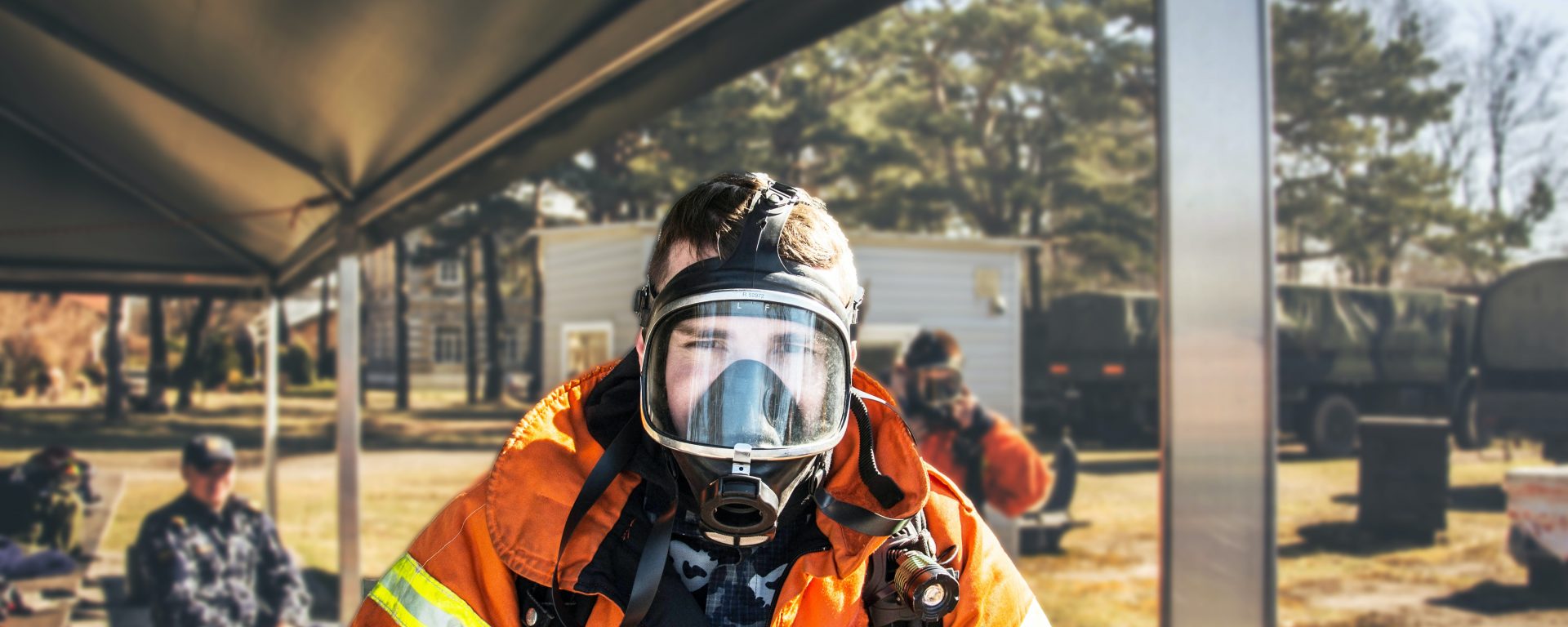
Self-contained breathing apparatus (SCBA) also known as compressed air breathing apparatus (CABA) is used when entering a known hazardous environment. Most recognisably, self-contained breathing apparatus is used by the Fire Services to enter areas with large amounts of smoke and noxious gases, however, it may also be used to enter areas with a known risk of asbestos exposure, silica dust, mould and other hazardous materials. Such RPE is particularly beneficial for workers that need to freely move around, opposed to being attached to a static airline.
A SCBA set consists of 3 main components;
- A cylinder of compressed air,
- A back plate that holds the cylinder and reduced the air from high pressure (200-300 bar) to a medium pressure (5-11 bar),
- A face mask
Airline Breathing Apparatus
Airline breathing apparatus is where compressed air supply is fed to the user’s face mask via an airline harness, either from a cylinder bank or a breathing air compressor. Users will typically also carry escape breathing apparatus in case of emergency.
This system is most commonly used where hazards are relatively localised and air supply is required for longer periods of time (SCBA is more appropriate for short-term tasks).
When Should You Wear RPE?
There are laws in place that require employers to prevent or control the exposure to hazardous substances at work. RPE and other breathing apparatus should always be the last line of defence against exposure to hazardous materials; employers should first aim to control exposure by other measures such as local exhaust ventilation. However, breathing apparatus may still be needed:
- Whilst installing other control measures
- For maintenance
- During the temporary failure of other control measures
- For short or one-off procedures
- When needed in addition to other control measures
Do I Need Breathing Apparatus Training?
Breathing apparatus training is essential for any individual who is required to wear RPE in hazardous environments. Courses typically cover all aspects of breathing apparatus, including theory, pre-use checks, donning, after-use check, storage and cleaning. However, courses may not cover all types of breathing apparatus, therefore, it’s best to thoroughly check course materials based on your specific needs.
Further to this, all wears must undergo a face fit test to ensure that breathing apparatus face masks create a secure seal around the mouth and nose. You can learn more about face fit testing in our recent blog Do You Have to Shave for a Face Fit Test?
Breathing Apparatus and RPE at Thermac
Thermac provides a variety of breathing apparatus for hire that is ideal for use in hazardous environments and projects that involve asbestos removal, tank cleaning, lead paint removal, sewerage and much more. Choose between Air Purification Trolleys, Air Compressors, Airline Breathing Apparatus and other RPE, all of which provide the highest level of breathing protection for a range of environments.