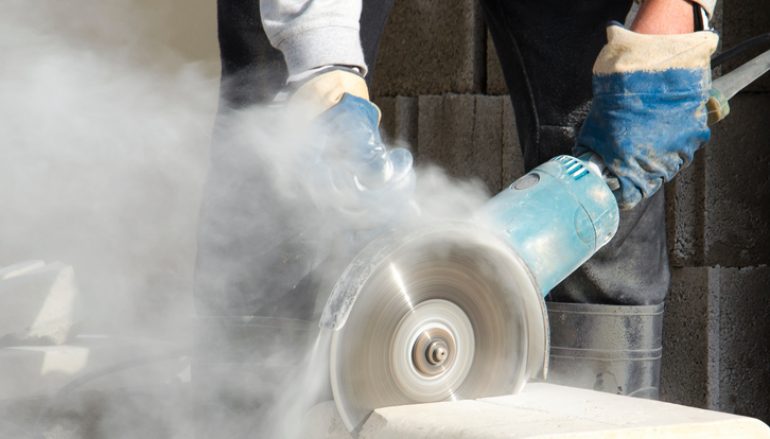
Silica dust is hazardous dust that is released from various materials when cut into, sanded, or otherwise disturbed. As such, proper precautions should be taken when working with or removing such materials, such as the use of appropriate filters and other equipment. But, what filters are suitable for use with silica dust?
So, what filter is needed for silica dust? Silica dust is a hazardous material that can cause serious health issues with long-term exposure. As such, HEPA filters, used inside of H-Type vacuums, are required to minimise the risk of exposure to silica dust and create a safer working environment.
Read on to learn more about the equipment required when working with hazardous materials like silica dust.
Which Type of Filter Is Needed to Remove Silica Dust?
When working with silica dust, a HEPA filter used in conjunction with a H-Class vacuum is recommended in order to keep exposure to silica below the Workplace Exposure Limit (WEL) of 0.1mg/m3 respirable dust, averaged over 8 hours.
HEPA (high efficiency particulate air) filters are a component of industrial vacuum cleaners used to manage the exposure of hazardous materials, such as asbestos and silica dust. These specialist filters remove at least 99.97% of particles from the air, including those as small as 0.3 microns in size (for reference, there are around 10,000 microns in a centimetre).
What’s special about HEPA filters is that they are tried, tested, and approved against industry standard BS EN 1822 , ensuring that hazardous materials are efficiently removed to a safe level.
Without such filters, workers risk respirable crystalline silica exposure, which can cause conditions such as cancer and Silicosis, particularly if workers are exposed to the substance for long periods of time.
What Equipment is Needed to Remove Silica Dust from the Air?

In cases of hazardous materials like silica dust, HEPA filters are often used inside H-Type vacuums. These industrial vacuum cleaners are used for the collection of fine and potentially hazardous dusts including:
- Silica
- Asbestos
- Lead
- Ceramic Fibres
- Wood
- And other dusts in the following circumstances:
< 0.005% Dusts with maximum allowable concentrations (MAC) < 0.1 mg/m³
Is Specialist PPE or RPE Needed When Working With Silica Dust?
If you are working in an environment with a risk of silica dust, your employer must warn you of this and provide you with suitable RPE and PPE. This may include coveralls, suitable work boots and overboots, gloves, eye protection and, in most cases, a respirator.
Where respiratory protection is required, HSE stipulates that the following precautions are followed:
- Ensure you are wearing the correct respirator for the job, including the appropriate filter
- Ensure that filters are changed regularly
- You will need to have a face-fit test to ensure that the respirator fits correctly
- You should be clean shaven when fitting and wearing the respirator to ensure a good fit
- Do not use the respirator if it does not, or no longer fits correctly
- You need to be trained to use, check and clean the respirator
- Equipment is stored in a clean, dust-free environment
- If any defects are suspected, do not use the respirator, and ensure that the appropriate people are notified
Do You Need a Specialist to Remove Silica Dust?
You do not need to be a specialist to remove silica dust, nor do you need to be trained in the area. However, employers have a duty, in line with The Control of Substances Hazardous to Health Regulations 2002 (COSHH), to minimise risks associated with silica dust. These include:
- Conducting and keeping records of risk assessments
- Communicate any matters of significance about risk assessments with employees
- Consider using alternative, non silica-containing substances where possible
- Prevent and control exposure to silica by employing methods to keep exposure below the WEL of 0.1,g/m3 . HEPA filters and H-Class vacuum cleaners are great options here
- Providing suitable PPE and RPE
- Maintaining equipment, such as HEPA filters and H-Class vacuums
- Instruct and train workers appropriately
- Communicate the health risks associated with working with silica
- Arrange health surveillance where appropriate
Meanwhile, whilst you don’t have to be a specialist, you do have a duty to yourself to ensure that you are aware of the health risks associated with silica dust, how to minimise and avoid exposure, and other factors to ensure a safe working environment.
- Ask a supervisor if the materials you are working with contain silica or other hazardous dusts
- If you are unsure, ask how to perform the job correctly, without risk to your health
- Follow all safe working procedures, silica-related and otherwise
- Use controls, such as HEPA filters and H-Class vacuums to manage hazardous fibres
- Wear appropriate PPE and RPE
How Harmful is Silica Dust to Humans?

Whilst even small amounts of exposure to silica dust can be harmful, exposure to large amounts can cause serious health problems such as cancer and Silicosis, to which there is no cure as lung damage cannot be reversed.
Once silica fibres enter the lungs, it can cause inflammation and gradually lead to scarred lung tissue and result in ill-functioning lungs. This can further lead to other conditions such as chest infections, TB, Pulmonary Hypertension, heart failure, Arthritis, and Kidney Disease, amongst others.
The main symptoms of Silicosis include a persistent cough, shortness of breath, and severe fatigue. If you notice such symptoms in yourself or a coworker, consult your GP as soon as possible.
A suitable filter, such as a HEPA filter and a H-Type vacuum, alongside well fitting respiratory equipment can help to minimise exposure to silica, and considerably lessen the risk of developing Silicosis or other related health issues.
H-Type Vacuum Hire at Thermac
Our highly experienced development team here at Thermac have designed a range of industry-leading H-Class vacuum cleaners, available for hire for use in hazardous environments such as asbestos and silica dust.
Our H-Type vacuums are HEPA filtered, and are designed to standard BS 8520.3.2009, making them ideal for a wide range of applications where there is a need for the collection of fine and potentially hazardous dust.
Learn more, and browse our range of H-Type vacuum cleaners online today.