
Half Face (Asbestos) Masks
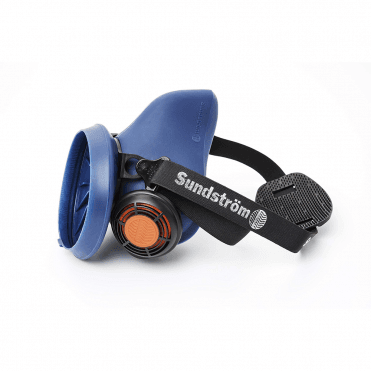
Our Standard EN140 half face asbestos masks are designed to cover the area immediately around the user's mouth and nose, leaving the rest of the face exposed. Despite not covering the full face, half face masks still provide comprehensive respiratory protection from harmful airborne particulates.
Our Standard EN140 half face asbestos masks are designed to cover the area immediately around the user's mouth and nose, leaving the rest of the face exposed. Despite not covering the full face, half face masks still provide comprehensive respiratory protection from harmful airborne particulates.
For regular exposure to asbestos fibres, we recommend a full face or half face asbestos mask, fitted with a P3 mask filter.
Quantitative and Qualitative face-fit mask tests are both suitable for testing the fit of half face masks. Quantitative fit testing (QNFT) provides a numerical measure of how well a facepiece seals against a wearer’s face; this is called a fit factor. These tests give an objective measure of face fit. Qualitative tests are more subjective, based on the wearer’s assessment of any leakage through the face seal region by detecting the introduction of bitter- or sweet-tasting aerosol as a test agent. Source: hse.gov.uk.
Yes - to form a seal around the user's face, users should be clean shaven to wear a half face mask, although a small moustache or goatee beard may be suitable if this is enclosed within the seal of the half mask. If users are unwilling to shave, a hooded or helmet face mask should be considered.
Yes - glasses or protective goggles can be used with half face masks, as long as they sit above the mask and do not interfere with the mask seal. If you wear glasses, you must be face-fit tested with these on to ensure that they are suitable and don’t interfere with the mask fit.